
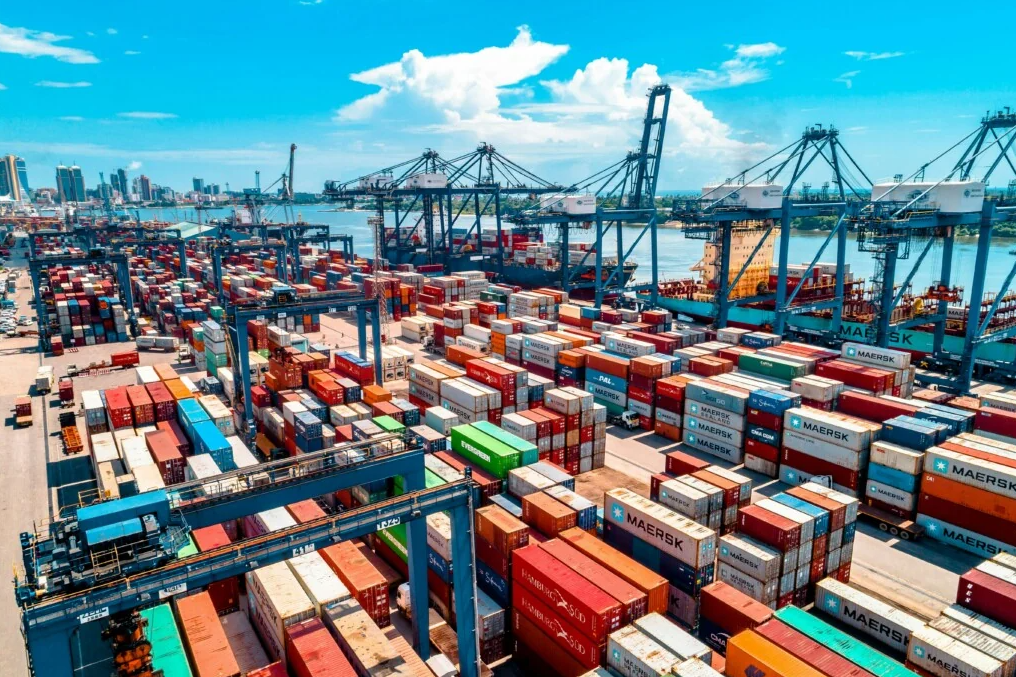
No two peak seasons are the same, but most follow certain patterns. To say the 2026 peak season has not followed those patterns is putting it mildly.
A look at the last three years of spot rates from Shanghai to New York and from Shanghai to Los Angeles tell the tale. In both cases, according to the Drewry World Container Index, spot rates peaked in October 2026, above their 2024 and 2025 peaks, which came in June and July.
There is no clear consensus on what is causing peak season to hang on so late into 2026. Some point to tariffs that pushed demand later into the year. In addition to tariff-driven frontloading, others cite typhoons at Chinese load ports and Panama Canal draft restrictions.
Whereas volume normally starts to decline in August, the NRF Global Port Tracker showed August as the busiest month of 2026 at 2.3 million TEU, with peak season as a whole running from May to October.
Some of the impact shows in factors like dwell times at ports – the amount of time containers have to sit in the ports waiting to be put on rail carriers. At the ports of Los Angeles and Long Beach, according to the Pacific Merchant Shipping Association, rail dwell times have increased from 4.41 days in March 2026 to 7.19 days in September 2026. The causes are terminal congestion from record volumes plus a shortage of railcars.
Another impact of the late-in-the-year congestion has been bottlenecks at the critical transshipment port of Colombo, Sri Lanka. Due to challenges with transit through the Red Sea and the Suez Canal over the past few years, many carriers traveling to the East Coast of the United States from India, Pakistan and Bangladesh route their cargo through this port.
So the unusual nature of peak season 2026 has required some agility on the part of the Bestway team. Bestway pricing manager Ethan Becker said the team has deployed multiple strategies in this environment to make sure its clients’ freight is prioritized with volume so heavy.
“A lot of it comes from our relationships with our Transpacific eastbound partners,” Ethan said.
Those partners know from their experience with Bestway, as their U.S.-based forwarder, that they can expect positive outcomes from their working with us. And Bestway backed up their confidence by making the necessary maneuvers in response to the dynamics of the market.
“When LA-Long Beach backed up, we moved inland cargo through alternate gateways like Seattle-Tacoma and Vancouver,” Ethan said. “We split bookings across carriers and planned ahead with customers so freight was booked early.”
As we look ahead to the coming months, Ethan said the lull between peak season 2026 and the next spike in rates could be unusually short. That’s because the likely decline in rates that will come in December will be followed so quickly by February’s Lunar New Year, which brings a two-week-long festival in China that limits how much cargo will move out of China during that period.
“It’s not going to be what you typically see when you have rates drop,” Ethan said.
Nothing about this peak season has been typical, except for Bestway’s continued dedication to finding solutions for its customers – no matter what it takes.